• Home
  • About

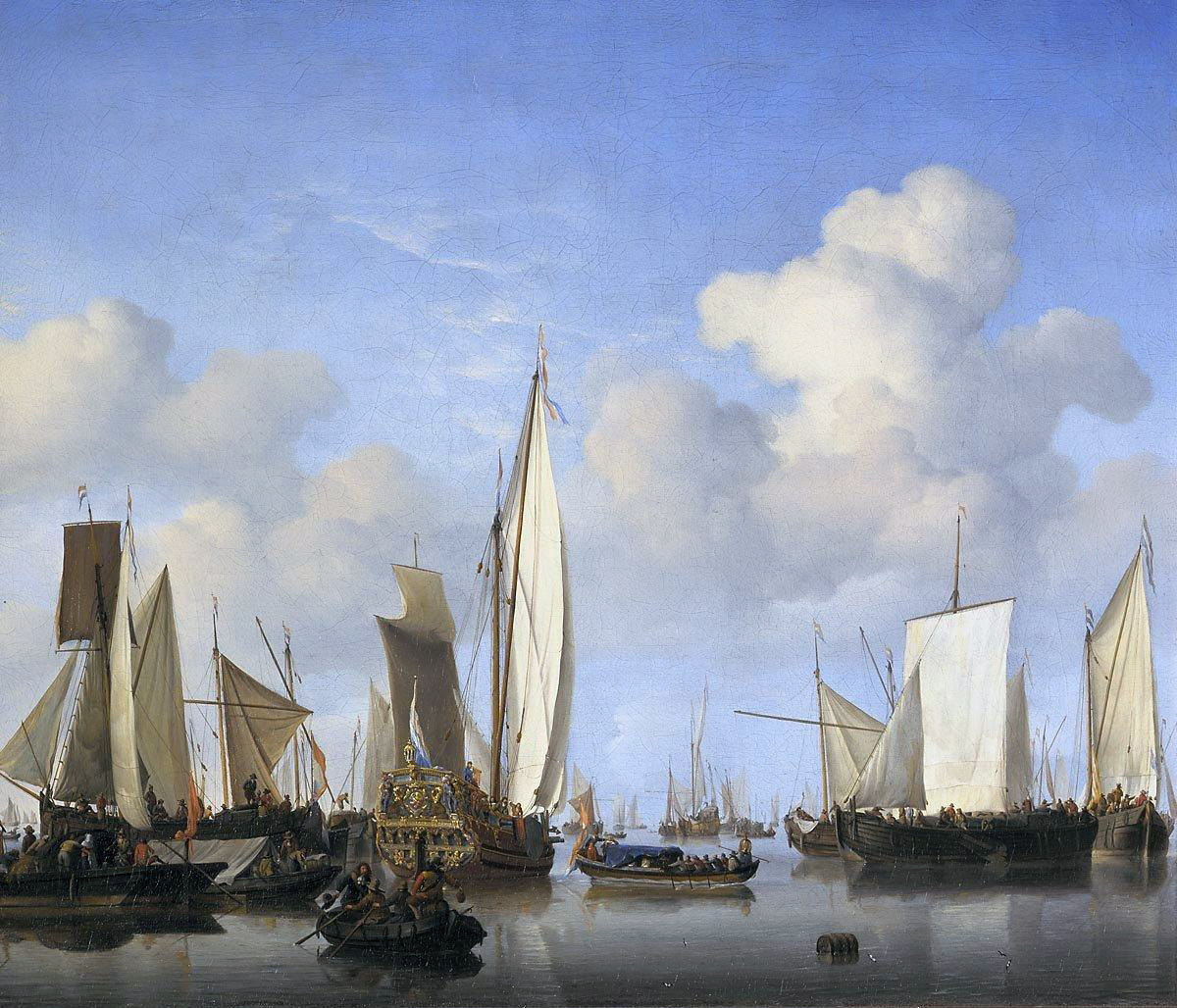
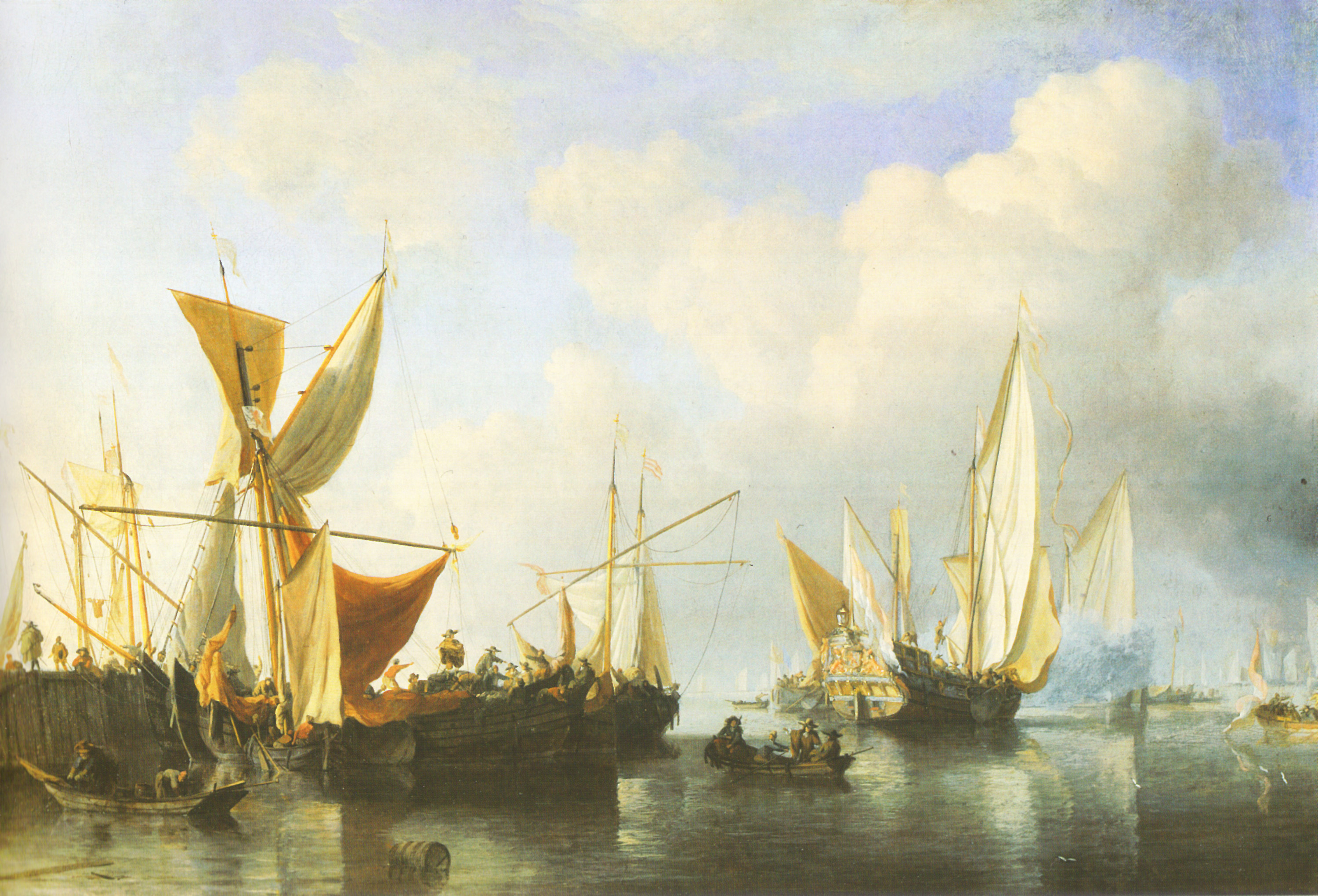
Ships on the Roadstead, 1658

Published in April 14th, 2009
Posted by admin in 17th Century, Dutch Navy, Harbors, Willem van de Velde the Younger
No Comments
Schepen op de rede (Ships on the Roadstead)

Schepen op de rede (Ships on the Roadstead)

By Willem van de Velde the Younger, 1658

This work by Willem van de Velde displays a calm scene of Dutch merchant and fishing vessels on a roadstead in a still weather. In the middle of the painting a yacht with a richly decorated stern  dominates the scene while small boats shuffle goods and passengers between humble looking merchant ships.

continue reading.....

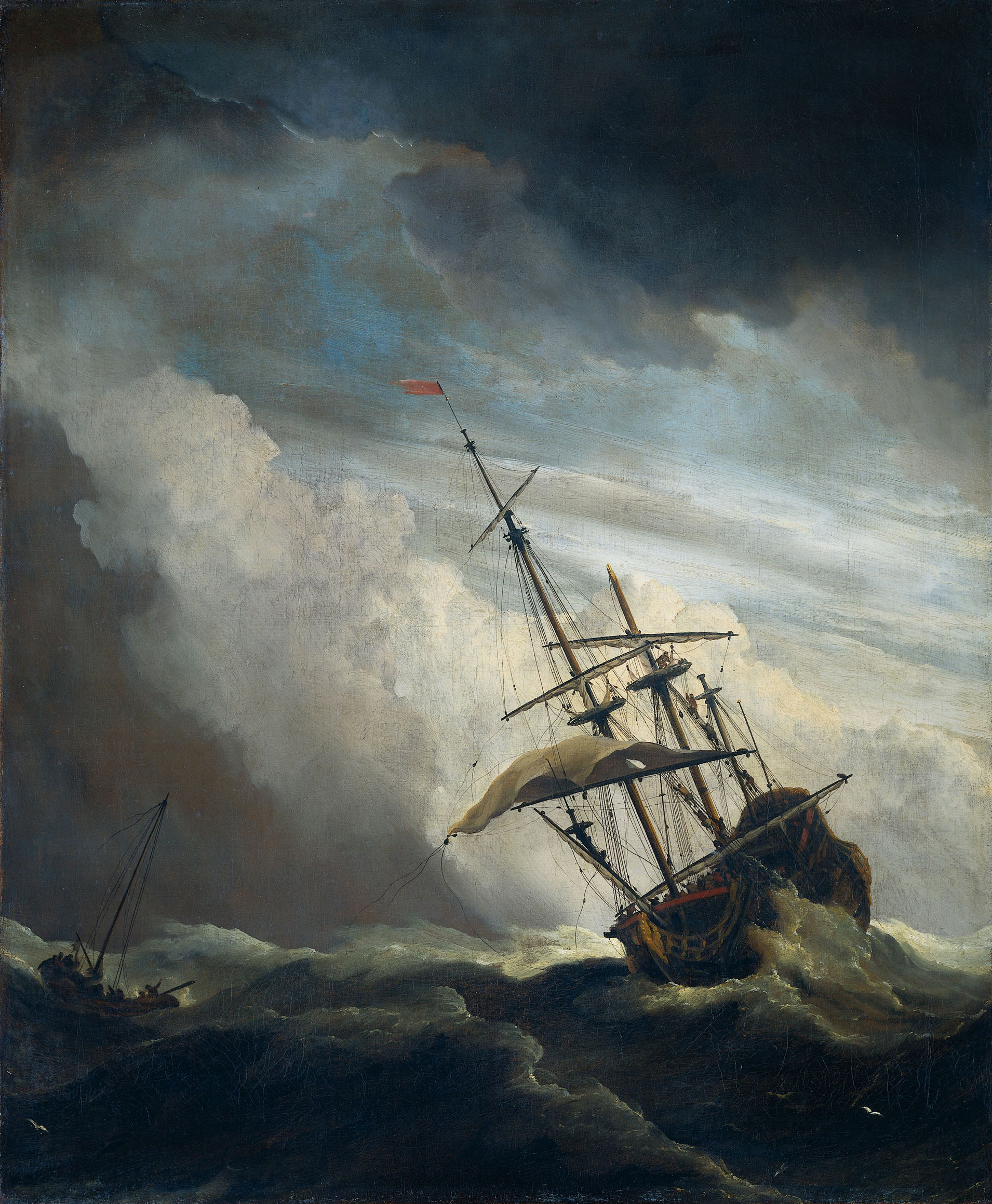
A Ship in High Seas Caught by a Squall, known as ‘The Gust’ (De Windstoot)

Published in April 12th, 2009
Posted by admin in 17th Century, Dutch Navy, Willem van de Velde the Younger
No Comments
De Windstoot (The Gust)

De Windstoot (The Gust)

By Willem van de Velde the Younger (ca. 1650-1707)

Rijksmuseum Amsterdam

The painting depicts a three masted ship and a small boat caught by  a raging storm.

continue reading.....

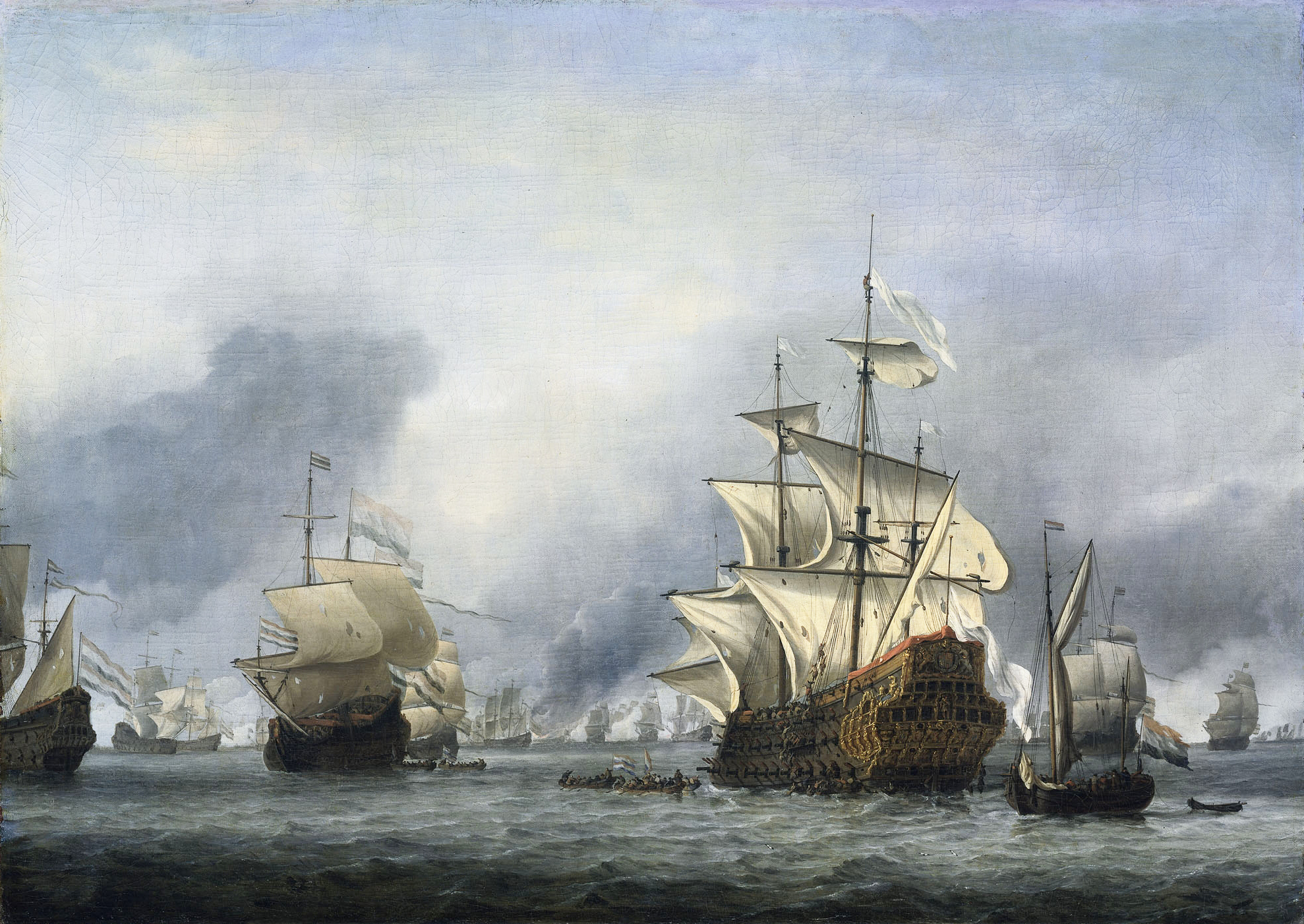
The surrender of Prince Royal at the Four Days Battle, 13 June 1666: an Episode from the Second Anglo-Dutch War

Published in February 1st, 2009
Posted by in 17th Century, Battle Scenes, Dutch Navy, Royal Navy, Second Anglo-Dutch War (1664–67), Willem van de Velde the Younger
No Comments

By Willem van de Velde the younger

Rijksmuesum Amsterdam

On the third day of the Four Days Battle, 3 (13) June 1666, the flagship of Vice-Admiral  George Ayscue ran aground on the Galloper Sand. Terrified by the approaching Dutch fireships the crew of the “Prince Royal” was forced to surrender. The flood tide subsequently floated the ship, but her rudder was disabled and de Ruyter ordered her burned – to the fury of Cornelis Tromp, to whose squadron she had struck.

‘And so we lost the second best ship in England, having ninety brass pieces of ordnance and eight hundred men, which was a great grief to all the rest of the fleet,’ noted the sailor Edward Barlow.

Even after fifty-six years of service, ‘she was like a castle in the sea, and I believe the best ship that ever was built in the world to endure battering,’ wrote the minister of king Charles, Sir Thomas Clifford, ‘but she is gone and this is an ill subject to be longer upon’.

continue reading.....

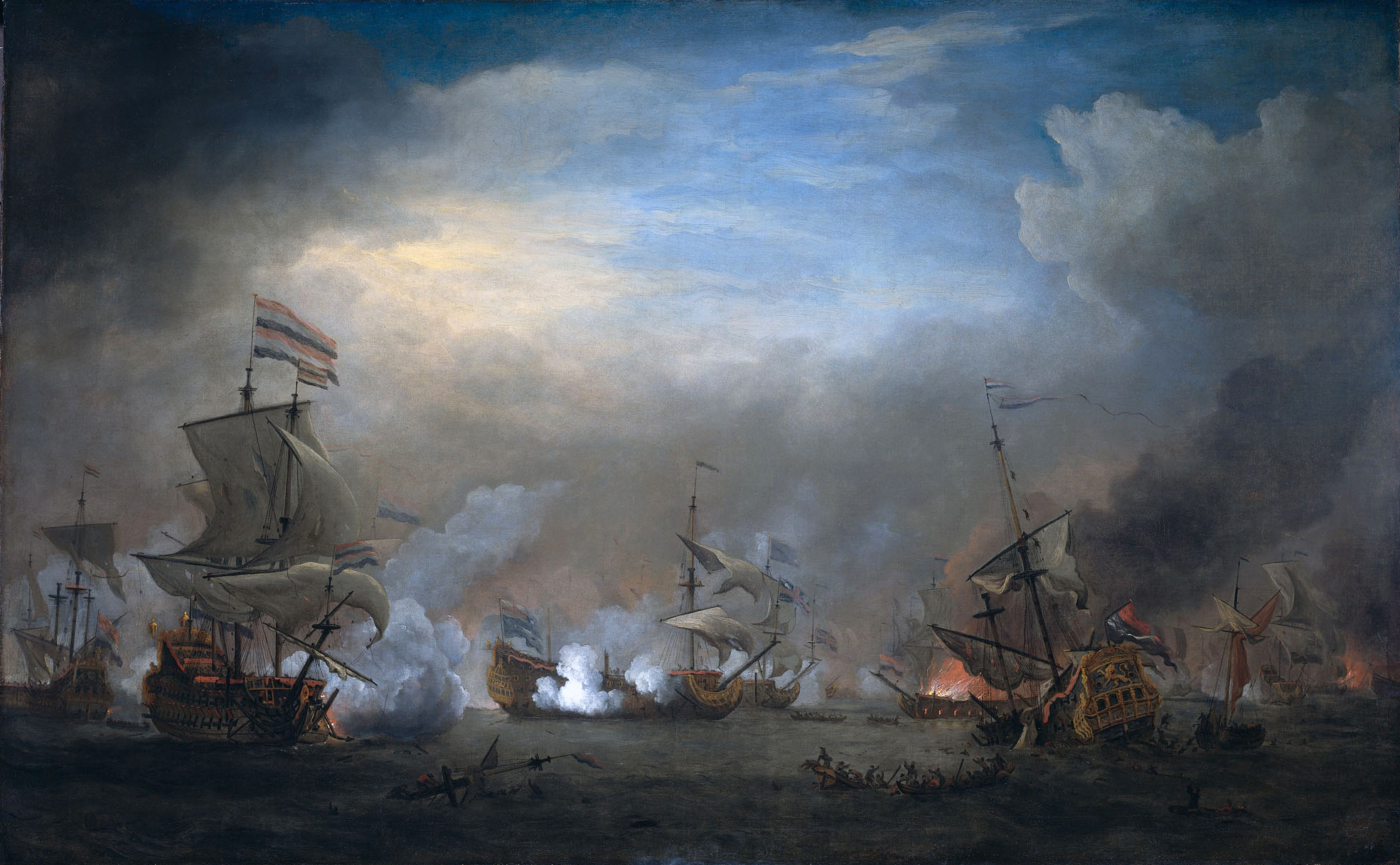
Battle of Texel (Slag bij Kijkduin), August 21st 1673

Published in January 27th, 2009
Posted by in 17th Century, Battle Scenes, Dutch Navy, Royal Navy, Third Anglo-Dutch War, Willem van de Velde the Younger
No Comments

Battle of Texel (Slag bij Kijkduin), August 21st, 1673

By Willem van de Velde, the Younger. 1673-1707

The full name of this painting is “Nightly Fighting Between Cornelis Tromp on the ’Gouden Leeuw’ and Sir Edward Spragg on the ‘Royal Prince’ During the Battle of Texel (Kijkduin) on August 21, 1673: Episode From the Third Anglo-Dutch War (1672-74)”. In this batlle the Dutch navy fought the combined force of the Royal Navy and the French Fleet, the alliance brought by the Treaty of Dover. French King Louis XIV invaded the Dutch Republic in 1672 seeking to gain control over the Spanish Netherlands. A secret treaty with King Charles II pulled England into the conflict and started the third Anglo-Dutch War.

The picture displays an episode from the Battle of Texel with Dutch ships in their failed attempt to capture the English flagship ‘Royal Prince’ (in the center). In this engagement the flagship of the Dutch admiral Cornelis Tromp the ‘Gouden Leeuw’ has been badly damaged and is seen sinking to the right of the ‘Prince‘.

The painting is exhibited in the Rijksmuseum Amsterdam.

continue reading.....

An English Sixth-Rate Ship Firing a Salute As a Barge Leaves; A Royal Yacht Nearby

Published in January 20th, 2009
Posted by in 18th Century, Royal Navy, Willem van de Velde the Younger
No Comments

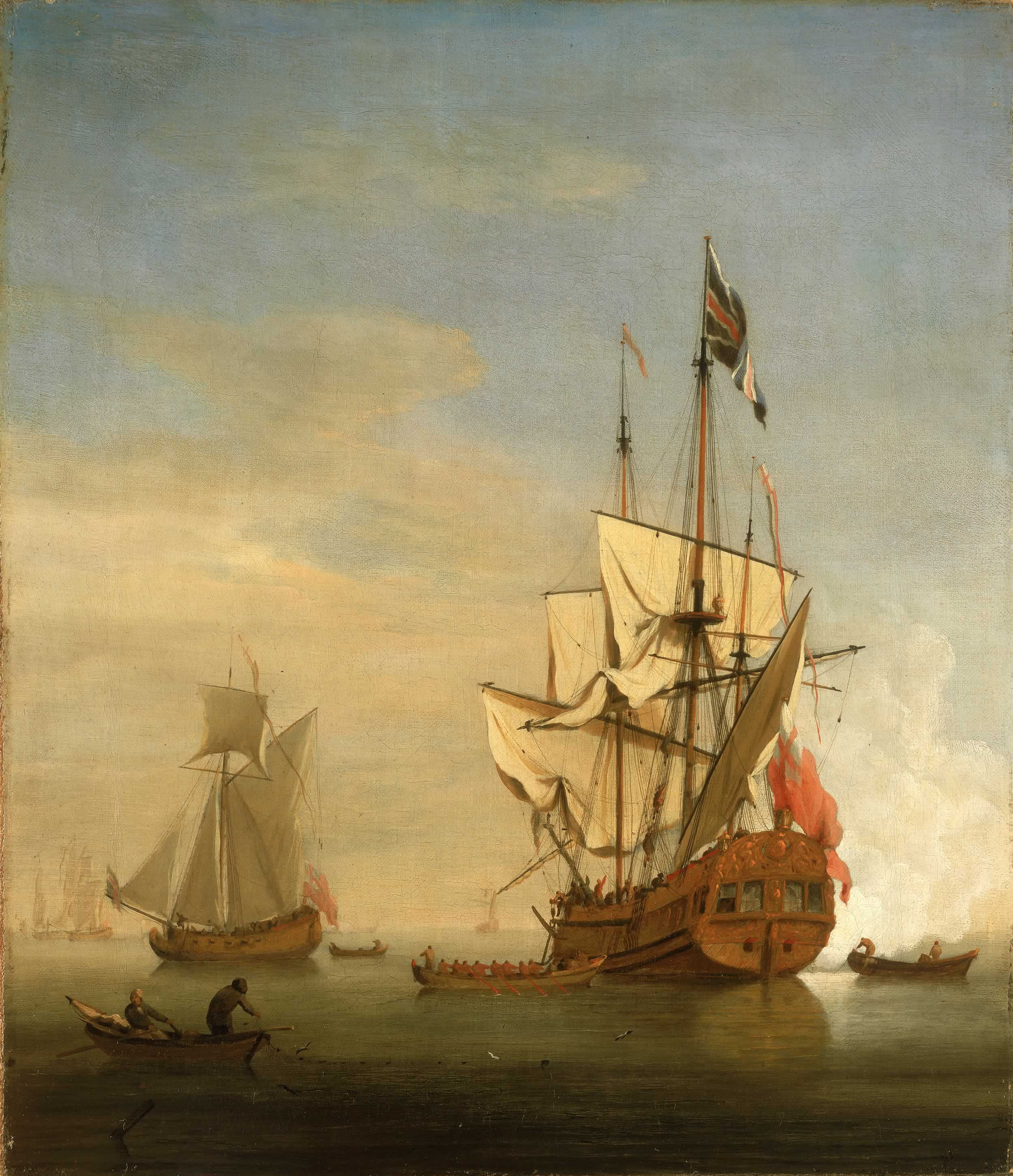
An English Sixth-Rate Ship Firing a Salute As a Barge Leaves; A Royal Yacht Nearby

AN ENGLISH SIXTH-RATE SHIP FIRING A SALUTE AS A BARGE LEAVES; A ROYAL YACHT NEARBY

by Willem van de Velde, the Younger, 1706

A variety of shipping is shown in a calm. In the foreground on the left a small boat with two figures on board is rowing towards the left. One figure works at the oars and the other is standing up in the boat and attends to a fishing net on the starboard side. To the right is an elaborately decorated sixth-rate ship in port-quarter view. She flies a Union flag at the main and a pendant at the mizzen, which is probably a signal. Her port anchor is visible and may indicate that she is about to anchor. She is flying a salute to starboard as a ship’s barge in the centre pulls away from her port quarter. A figure leans in a leisurely manner from the mizzen top, while other figures are occupied on the deck and in the rigging. In the left middle-distance beyond is a royal yacht, viewed from before the port beam with her mainsail, topsail, foresail and jib set. Other vessels can be seen in the left distance. It is has been suggested that the main vessel is the ‘Peregrine Galley’, which was a 20-gun ship built at Sheerness in 1700, since it resembles an annotated pen and ink drawing of this vessel with manuscript notes relating to her decoration.

The artist was the younger son of Willem van de Velde the Elder. Born in Leiden, he studied under Simon de Vlieger in Weesp and in 1652 moved back to Amsterdam. He worked in his father’s studio and developed the skill of carefully drawing ships in tranquil settings. He changed his subject matter, however, when he came with his father to England in 1672-73, by a greater concentration on royal yachts, men-of-war and storm scenes. From this time painting sea battles for Charles II and his brother (and Lord High Admiral) James, Duke of York, and other patrons, became a priority. Unlike his father’s works, however, they were not usually eyewitness accounts. After his father’s death in 1693 his continuing role as an official marine painter obliged him to be more frequently present at significant maritime events. The painting is signed ‘W.V.Velde J 1706′.

continue reading.....

Cannon Fired (Het Kanonschot)

Published in January 19th, 2009
Posted by in 18th Century, Dutch Navy, Willem van de Velde the Younger
1 Comment

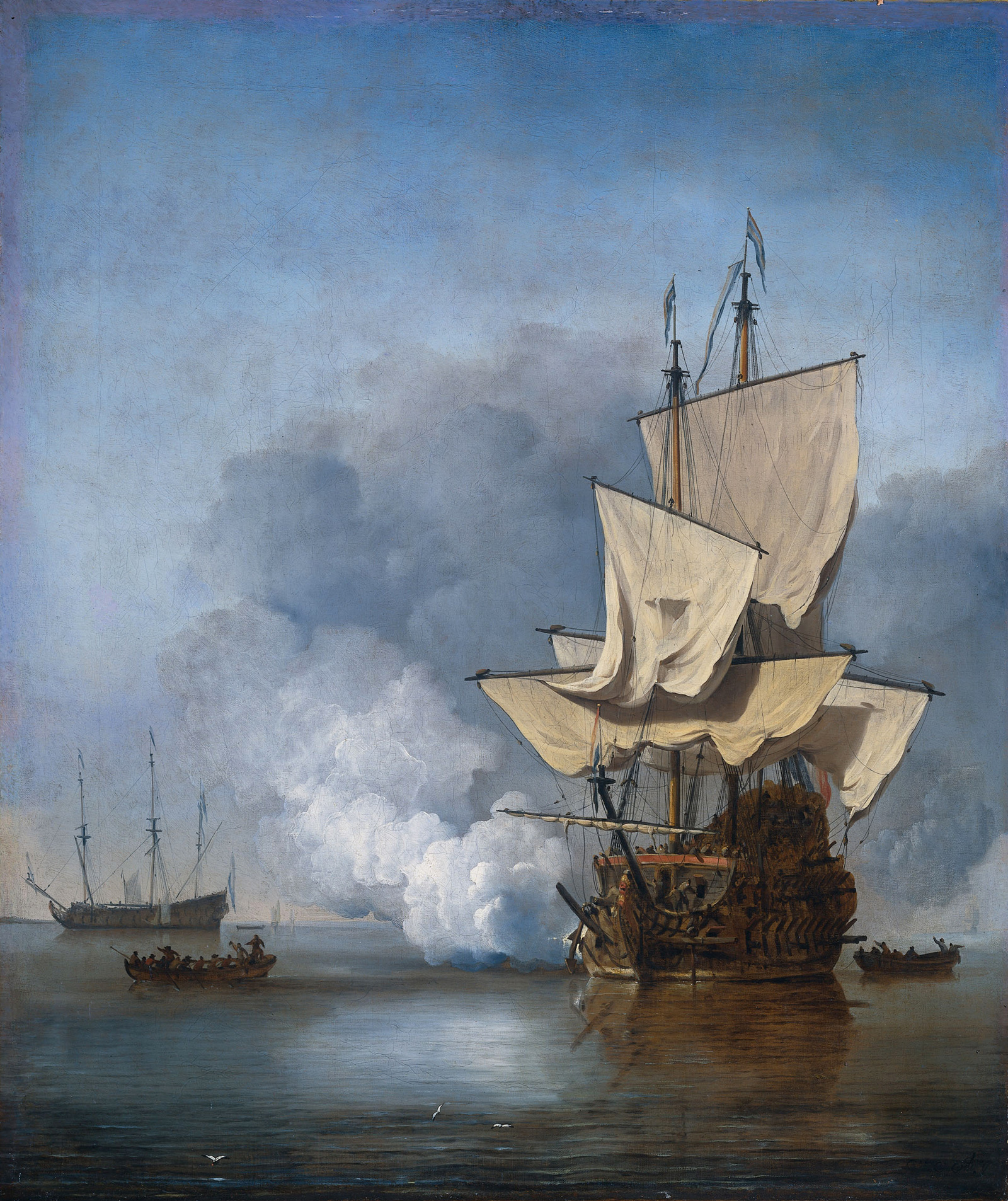
Canon Fired (Het Kanonschot)

CANNON FIRED (HET KANONSCHOT)

By Willem van de Velde, the Younger, 1707

(Rijkmuseum Amsterdam)

A warship in calm waters fires a cannon. Two boats are on the either side of the ship. Another warship is seen in the distance.

continue reading.....

A Dutch Flagship Coming to Anchor with a States Yacht Before a Light Air

Published in January 19th, 2009
Posted by in 17th Century, Dutch Navy, Willem van de Velde the Younger
No Comments

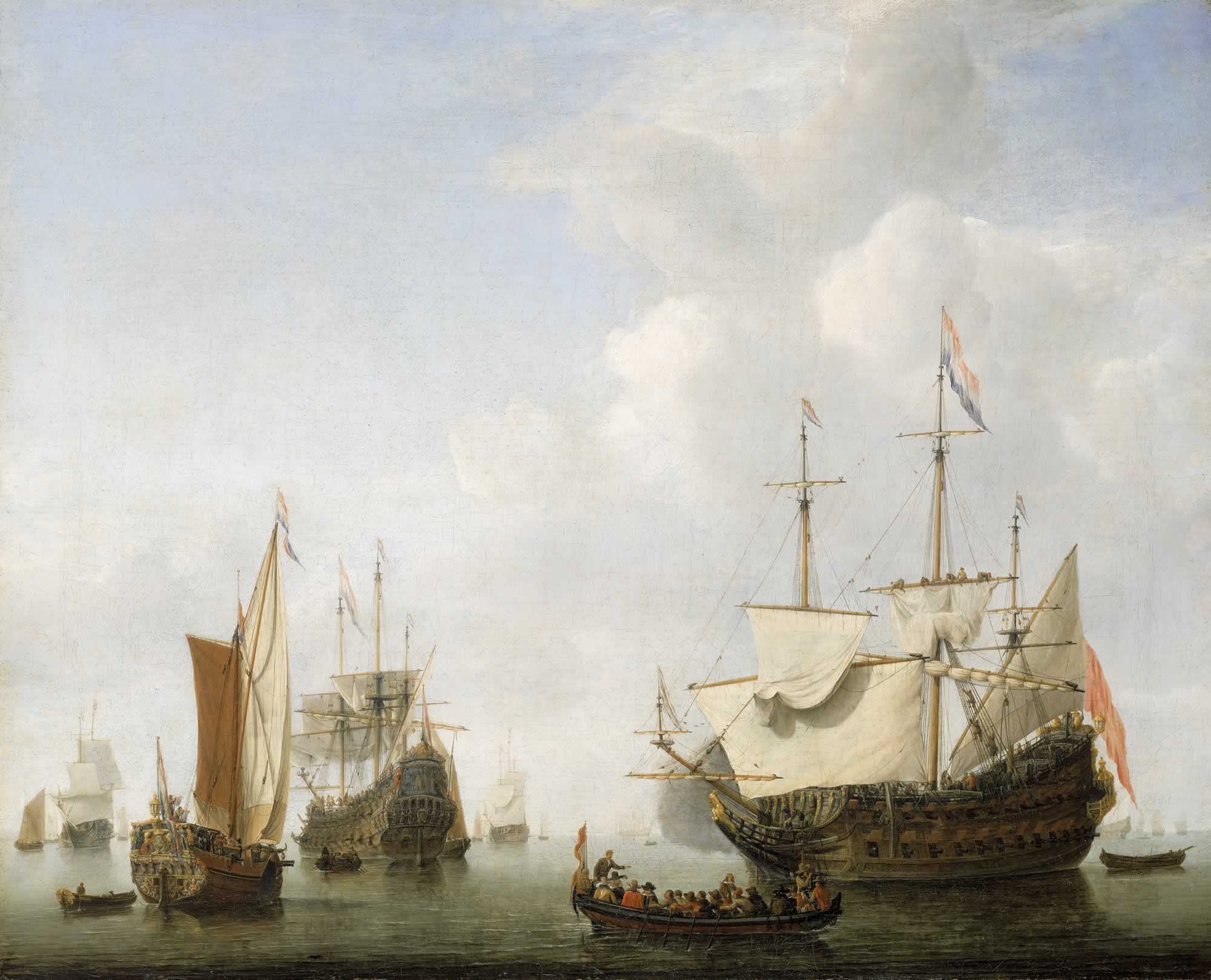
A Dutch Flagship Coming to Anchor with a States Yacht Before a Light Air

A DUTCH FLAGSHIP COMING TO ANCHOR WITH A STATES YACHT BEFORE A LIGHT AIR

By Willem van de Velde, the Younger, 1658

An early painting by the artist before he had developed his own artistic style of ship portrayal. In the left foreground is a States yacht, in starboard-quarter view, running towards the flagship under a white sprit-sail and a brown square sail boomed out to port. She is thought to be the yacht laid down for Prince Frederik Hendrik but completed after his death in 1647 for Willem II. A date inscribed in the cartouche above the rudderhead is understood to be the date of the picture although only ‘165?’ can now be clearly read. She bears the arms of Orange and lion supporters on the stern, and Dutch colours at the peak, stern and dipped on a staff at the masthead. Two trumpeters positioned in the stern face towards the right as they play their instruments. The yacht is towing a boat with two men in it.

In the left middle distance is a ship at anchor, in port-quarter view, believed from her stern decoration to be the ‘Huis te Zwieten’, built in 1653. She shows the arms of Amsterdam above the rudder as well as crossed anchors to either side of it, signifying the Admiralty, and flies a Dutch flag at the fore and also as an ensign. In the left background are two ships under sail, close-hauled on the starboard tack. Other ships and vessels lie in the distance. To the right a large ship in port-bow view is under way close-hauled on the starboard tack and firing a forward gun to starboard. This is probably the ‘Eendracht’, 76 guns, built in 1653, with a prominent turret on her quarter gallery and lion supporters just visible on the taffrail. This was the flagship of Lieutenant-Admiral J. van Wassenaer who assembled the fleet that was to sail to the Baltic in October 1658. She flies a Dutch flag at the main, a plain red ensign and a striped jack, red white and blue. Men are visible on the main topsail yard preparing to furl the sail.

Pulling to the right in the centre foreground is a ship’s boat with four oars a side, four distinguished people seated aft and a trumpeter standing forward. A figure standing in the stern is gesturing towards the notable men in the boat. Lieutenant-Admiral Michiel de Ruyter, promoted Vice-Admiral of Holland and Westfriesland in November 1653, flew his flag in the ‘Huis te Zwieten’ on convoy duty to the Mediterranean and back in 1654.

On 27 May 1658, at the time Wassenaer was assembling his Baltic squadron in the Texel, he once more sailed in her with a squadron for Portugal, and again in May 1659 when he led reinforcements to Wassenaer in Denmark. Assuming that the flag at the foremast of the ‘Huis te Zwieten’ signifies de Ruyter’s substantive rank of vice-admiral, the conjunction shown in the picture may therefore commemorate the scene in the Texel in the spring of 1658.

The artist was the younger son of Willem van de Velde the Elder. Born in Leiden, he studied under Simon de Vlieger in Weesp and in 1652 moved back to Amsterdam. He worked in his father’s studio and developed the skill of carefully drawing ships in tranquil settings. He changed his subject matter, however, when he came with his father to England in 1672-73, by a greater concentration on royal yachts, men-of-war and storm scenes. From this time painting sea battles for Charles II and his brother (and Lord High Admiral) James, Duke of York, and other patrons, became a priority. Unlike his father’s works, however, they were not usually eyewitness accounts. After his father’s death in 1693 his continuing role as an official marine painter obliged him to be more frequently present at significant maritime events. The painting is signed lower right ‘W.V.Velde’ and is unclearly dated to the 1650s as already noted.


continue reading.....

The ‘Gouden Leeuw’ at the Battle of the Texel, 21 August 1673

Published in January 8th, 2009
Posted by in 17th Century, Battle Scenes, Dutch Navy, Royal Navy, Third Anglo-Dutch War, Willem van de Velde the Younger
No Comments

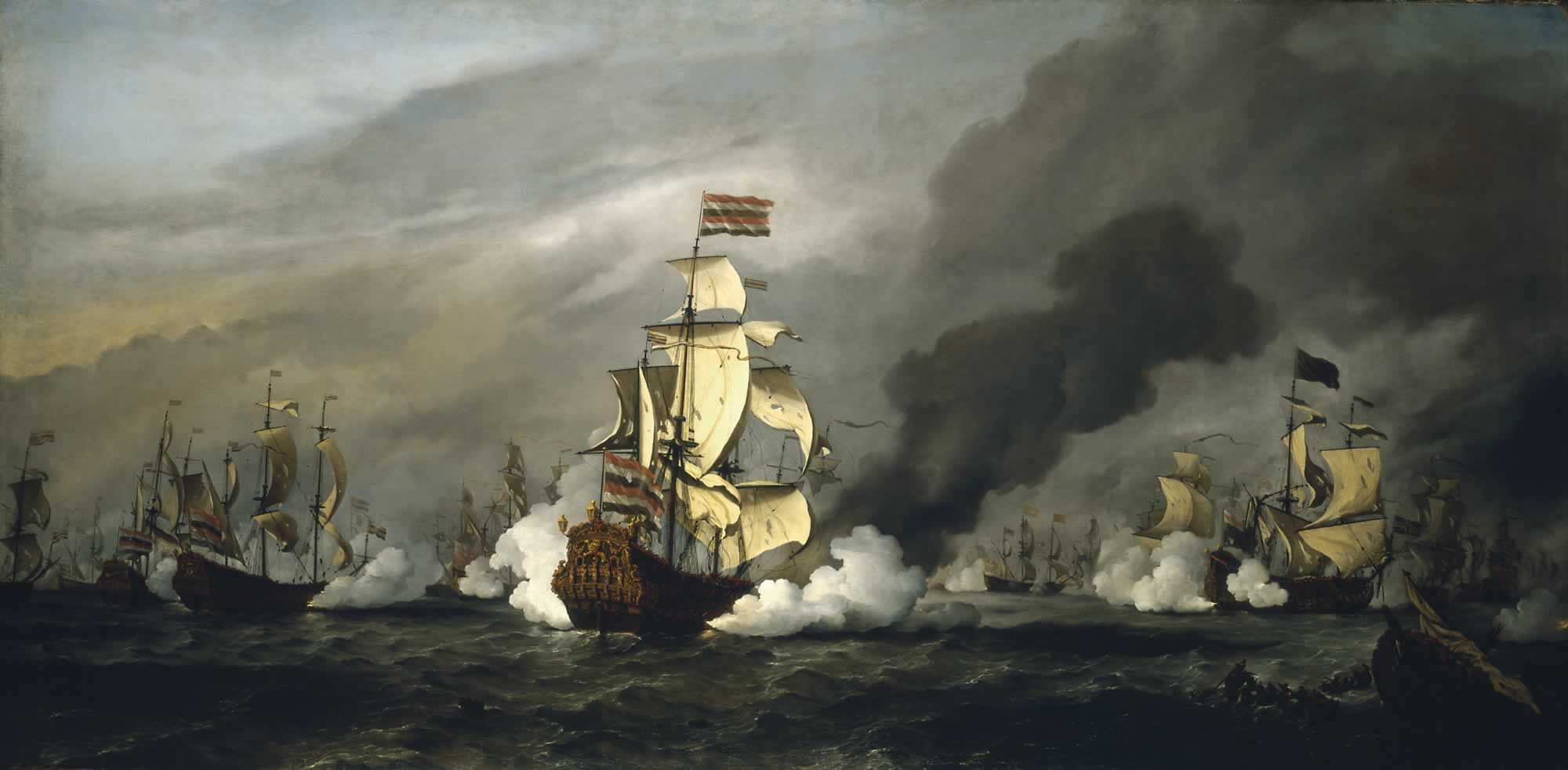
The \'Gouden Leeuw\' at the Battle of the Texel, 21 August 1673

The Battle of the Texel was fought between the Dutch and an Anglo-French fleet near Texel Island, off the Dutch coast. The low horizon, dramatic lighting and gunsmoke render this majestic work an immediate experience for the viewer. It was painted in 1687 as a Dutch commission, when van de Velde had already long been an ‘English’ court painter. The picture may even have been ordered by Admiral Cornelis Tromp, since it focuses on his flagship the Golden Leeuw (Golden Lion).

continue reading.....

Social Network

  • Subscribe to the feed
  • Stumble this site main post
  • Add to my Technorati favourite
March 2010
M T W T F S S
« Jan    
1234567
891011121314
15161718192021
22232425262728
293031  

Recent Entries

  • Battle of Livorno (Leghorn), March 14 1653
  • Bombardment of Algiers by Anglo-Dutch Forces on August 26-27, 1816
  • Battle of Scheveningen (Ter Heide) 31 July (10 August) 1653
  • Battle of Sinop (The Day), 18 November 1853
  • Dutch Ships Running down Spanish Galleys off the Flemish Coast, 3 October 1602
  • The Warship ‘Brielle’ on the Maas before Rotterdam
  • Ships on the Roadstead, 1658
  • A Smalschip with Two Dutch East Indiamen Coming to Anchor
  • The Frigate “De Ploeg” on the Ij in Amsterdam
  • The Merchant Shipping Anchorage in the Texel with Texel Island and Oude Schild to the North West

Recent Comments

  • HUILLE (Jean-Ma… in View Of The 'Pont-Neuf' From The Co…
  • dutchprovence in The Frigate "De Ploeg" on the Ij in…
  • ZI in Battle of Scheveningen (Ter Heide) …
  • Pauld in The First Post And The First Painti…
  • dutchprovence in Lieutenant-Admiral Michiel de Ruyte…
  • Frankius in Cannon Fired (Het Kanonschot)
  • » The Occ… in French Fire Rafts Attacking the Eng…
  • » Between… in The Execution of Admiral Byng, 14 M…
  • » Harriso… in The Improved Chain Pump
  • » The Imp… in Bombardment of the Morro Castle, 1 …

Categories

  • 17th Century
  • 18th Century
  • 19th Century
  • Battle Scenes
  • Drawings
  • Dutch Navy
  • First Anglo-Dutch War
  • French Navy
  • French Revolutionary War
  • Harbors
  • Ludolf Bakhuysen
  • Portraits
  • Royal Navy
  • Russian Navy
  • Second Anglo-Dutch War (1664–67)
  • Seven Years War
  • Third Anglo-Dutch War
  • Uncategorized
  • Unidentified Paintings
  • War of American Independence
  • Willem van de Velde the Elder
  • Willem van de Velde the Younger

Translators

French German version Spanish version Italian version

Meta

  • Log in
©2009 History of the Sailing Warship in the Marine Art